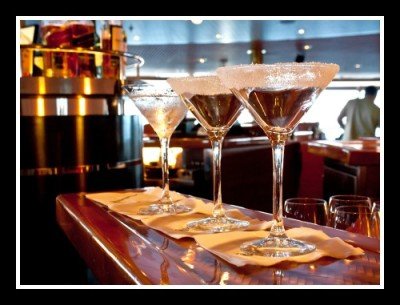
The Superyacht Stewardess’s Guide to Setting a Table

The Superyacht Stewardess’s Guide to Setting a Table

From Cutlery Chaos to Dining Delight: How To Set A Table

Ahoy there, fellow stewards and stewardesses of the superyacht world! While we’re busy ensuring our guests are sailing smoothly through the seas of luxury, there’s one task that can sometimes leave us feeling a bit like we’re navigating uncharted waters: setting the table. But fear not, for I’m here to guide you through the choppy seas of cutlery confusion and onto the shores of dining delight!

Now, setting a table may seem like a simple task, but for those of us in the world of superyachts, it’s an art form. After all, we’re not just setting a table; we’re creating an experience. So, grab your napkin folds and let’s dive in!

Guidelines for Setting a Table

1. Know Your Space:Before you start arranging cutlery like a game of culinary Tetris, take a moment to assess your table space. You don’t want your guests feeling like they’re dining in a cutlery jungle gym.

2. **Consider the Menu:** Just as a captain charts their course, plan your table setting according to the meal being served. Different courses may require different utensils, so make sure you’re prepared. Just allow your FRIENDLY  chef some time to brief you properly.

3. **Mind Your Etiquette:** A superyacht stewardess is a paragon of etiquette, so remember to follow proper dining protocols. Forks to the left, knives to the right, and napkins neatly folded – let’s keep it classy, folks.

How to Set a Table

Imagine, if you will, a pristine white tablecloth gently billowing in the sea breeze. At each setting, gleaming silverware rests atop fine china, while crystal glasses stand at attention, waiting to be filled with the finest vintage.

**How to Set a Table with Cutlery:**

1. **Start with the Basics:** Begin by placing the dinner plate in the center of each setting. To the left, arrange the forks in order of use – salad fork, dinner fork – with the prongs facing up like little culinary antennae.

2. **Knife Knowledge:** On the right side of the plate, lay the knife with the blade facing the plate. To its right, position the spoons, each one ready to tackle its designated course with gusto.

3. **Don’t Forget the Extras:** Depending on the meal, you may need to add additional utensils. For example, a soup spoon or a seafood fork can elevate the dining experience from ordinary to extraordinary.

The Superyacht Stewardess’s Guide to Setting a Table – **Basic Table Setting Rules:**

1. **Keep it Balanced:** A well-set table is like a perfectly trimmed sail – balanced and poised for adventure. Make sure there’s an equal distance between each place setting to maintain harmony.

2. **Mind Your Space:** Avoid overcrowding the table with unnecessary clutter. Only include the essentials for each course to prevent a cutlery catastrophe.

3. **Stay Neat and Tidy:** Just as we strive for immaculate cabins, our table settings should be pristine. No crumbs, no smudges – just pure, unadulterated elegance.

**The Stewardess Bible:**

Consider this your holy grail of table setting wisdom, passed down through the ages by generations of superyacht stewards and stewardesses (ha ha, not really, it was just written by this old girl). Treat it with reverence, for within its pages lie the secrets to creating dining experiences that will be remembered long after the anchor is raised.

In conclusion, setting a table as a superyacht stewardess is no mere task – it’s an opportunity to showcase our skills and elevate the dining experience to new heights. So, polish those silverware, straighten those napkins, and let’s set sail for culinary excellence! Bon appétit, my fellow stewards and stewardesses!

Buy Your Copy Today.


How to Set a Table for a 3-Course Dinner

How to Set a Table for a 3-Course Dinner

How to Set a Table for a 3-Course Dinner

A three-course meal on board a super yacht would be classified as a casual dinner, consisting of an entree’, main meal and dessert. It would often be reserved for just the family or primary charterers onboard.

As a superyacht stewardess is just a part of the job, right? Well, yes and no. It is in the steward/ess job description, but what makes a dining experience just that little bit extra is all the effort you go to. Please let me explain further.

For an informal three-course dinner, you will need to consider the following to create a truly magnificent dining experience:

Table linen.

In this instance, as it is an informal dinner, I would recommend using the evening placemats and serviettes. Depending on the menu, choose colours that will complement the food. If the yacht doesn’t have evening placemats, or you are just purchasing new table linen, then look for delicate fabrics such as fine linen in gold, silver, black and intricate lace weaves for that luxurious feel. If you need a little inspiration on opulence, have a quick look at the CHRISTOFLE website.

The table centrepiece.

The centrepiece or table decorations again would be kept to a minimum. Consider a less is more approach. Use elegant hues such as creams, whites, and gold to bounce the soft candlelight around the room.

Cutlery.

Next to go onto the table is your freshly polished cutlery. As previously mentioned, this will consist of entrée, main and dessert cutlery. Forks on the left and knives on the right, the main cutlery is laid down closest to the plate, and then entrée will sit next to the mains on the outer side. Should soup be on the menu, then the spoon will be placed on the right side of the main fork. The placement of the dessert cutlery has been debated over and over, but as a traditionalist, I would lay the dessert cutlery in two ways. The first would be to like to lay the cutlery directly above the main plate with the spoon below the fork, with the spoon handle facing to the right and the fork to the left, which the service staff will pull down once the mains have been cleared.

Or I would leave it off the table together until the main has been completely cleared, then I would lay the appropriate cutlery just before the service of the dessert. It really depended on how many guests were eating and how formal the guests liked to be served.

Glasses.

Lastly,  consider the crystal wear. Do your guests drink wine? What wine will compliment the food. Because it is a three-course dinner, consider just placing a water glass and a wine glass on the table. I know this may upset some people, but nowadays, our guests know what they like, and indeed, the chef knows what wine will compliment the food. Of course, it is not a big deal if you would like to set the table with a water glass, a white wine glass and a red wine glass. But for an elegant dining experience, I would lay the table with minimal glass wear.

Finally, as a superyacht chief stewardess, you would always consider cultural diversity and differentiating service customs when you are briefing your junior crew onboard.


Purchase Your Copy of The Stewardess Bible and The Chief Stewardess Bible Here:

How to Set a Table for a 3-Course Dinner

Summary |Superyacht Stewardess Tips

How to Set a Table for a 3-Course Dinner

  • Table Linen
  • Table decorations
  • Place mats and napkins
  • Cutlery: (soup) Entrée, main, and dessert
  • Glasses: Water and wine

Soupspoon only if required. Accompanying condiments, salt and pepper, and extra wine glasses to be kept on the waiter’s station to be served if and when needed.


How to Set Up a Bar.

How to Set Up a Bar.

Shake, stir, blend and mix… bar tending is more than just throwing together a few different ingredients and then hoping for the best.

You need to be prepared, have a basic knowledge of the ingredients that you are using and have your bar well stocked and organized.  On board a super yacht you will be limited by the space you have, however  I have put together a list of the bare essentials which you will need to be successful in cocktail making:

The details below are essential to setting up any bar:

A cocktail shaker

Knives

Jiggers

Plates

Citrus juice squeezer

Straws

Ice cream scoop

Mixing Glasses

Cocktail pricks

Can opener/s

Zester

Corkscrew/s

A Bar Spoon/s

Mellon Baller

Bar Strainer

Ice tongs

Containers for sliced fruit garnishes

Garnishes

Umbrellas

Swizzle sticks

Cherries

fresh fruit

Pepper

Sea salt

Ice bucket/s

Blender machine

Ice maker

Nut Meg

Bottle opener/s

Ice crusher/ wooden hammer

How to Set Up a Bar.

To prepare for cocktail hour it is essential that you have your bar set up correctly, your garnishes prepared and your juices and syrups ready.

Another helpful tip is to plan ahead a little with your ice. Unless your ice machines can cope with the workload required to produce enough ice for ice for your:

  • Ice buckets
  • Smoothies
  • Chefs’ requirements
  • Soft drink demands,

Then I would make sure you have some bagged ice in the freezer.Especially in Greece and more remote places where you just can’t nip ashore and buy some. There really is nothing worse to find that you have run out of ice half way through the service.

In addition to the above you will need to have a good supply of the basic standards drinks on board.

Such as:

  • Wine
  • Beer
  • liqueurs
  • Cognac
  • Vodka
  • Gin
  • Tequila
  • Champagne
  • Whiskey
  • Garnishes.

I would recommend two x  750 ml bottles of the standard list below. Obviously, this will vary depending on your budget and storage limitations; however, with these minimum drinks on board, you will generally have every situation covered until you have an opportunity to re-provision.

Red Wine:

  • Merlot
  • Cabernet Sauvignon


White Wine:

  • Sauvignon Blanc
  • Chardonnayay
  • Chablis


Champagne:

  • Rose
  • Brut


Port:

  • Taylor’s
  • Dow’s 2007 Vintage


Rose:

  • Les domaines OTT
  • Sancerre Rosé Le Mont, Loire
Desert wine:

  • Château Haut Bernasse Le Clos Monbazillac
  • NV Yalumba Museum Muscat Barossa (half bottle)
Garnishes:

  • Lemon twists
  • Angostura bitters
  • Lime and lemon wedges
  • Salt and pepper
  • Maraschino cherries
  • Superfine sugar
  • Olives
  • Tabasco sauce
  • Orange slices
  • Worcestershire sauce


 Soft drink and juice:

  • Orange Juice.
  • Cranberry Juice
  • Pineapple juice.
  • Apple Juice
  • Tomato Juice
  • Coca-Cola – diet and regular
  • Lemonade or seven up
  • Mineral water
  • Club soda
  • Ginger ale
  • Tonic Water


Various Liqueurs:

  • Irish cream
  • Coffee liqueurs
  • Grand Marnier
  • Triple sec
  • Sambuca
  • Cointreau
  • White crème de menthe
  • Galliano


 Vodka:

  • Beluga Gold Line
  • Absolut vodka
  • Grey Goose


Whiskey and Bourbon:

  • Highland Park
  • Jefferson’s
  • Macallan


  Tequila:

  • Gran Patron Burdeos Anejo Tequila
  • Jose Cuervo


Gin:

  • Bombay Sapphire
  • Hendricks Gin


Cognac and Brandy:

  • Hennessy XO Cognac
  • Martell Cognac


Beer:

  • Lager
  • Ale


The Superyacht Stewardess and Basic Seamanship.

The Superyacht Stewardess and Basic Seamanship.

Basic seamanship can feel a little daunting for any newcomer to the yachting industry — but it is absolutely essential knowledge for any seafaring professional. And yes, that includes the superyacht stewardess.

Let me paint you a picture.

You have just landed your first job on a superyacht. Your bags are on board, you are buzzing with excitement, and the yacht is leaving port in two hours. The mate, chief officer, or safety officer — depending on the size of the vessel — gives you your initial safety briefing and walk-around, then asks you to meet him on the main deck, port side, amidships.

What do you do?

Do you giggle, flick your hair, and ask what on earth that means? Do you stride off confidently, only to find yourself hopelessly lost and thoroughly embarrassed when a crew member is sent to retrieve you? Or do you head straight to the correct spot — the middle of the vessel, roughly halfway between the bow and the stern, on the left-hand side?

If you want to be the third stewardess, read on.

Far too many stewardesses underestimate how important basic seamanship truly is. Understanding sailing terminology matters enormously — especially when the vessel is both your home and your workplace, and when knowing your way around could one day save your life.

Why Seamanship Matters for Interior Crew

You do not need to be a qualified deckhand to work in the interior. But the moment you step on board, you become part of the crew — and that carries real responsibilities. You will participate in safety drills. You will need to understand emergency procedures and your muster responsibilities. You will need to move around the vessel quickly and confidently, often in the dark, often under pressure.

Learning the language of the sea is the first step. It will help you navigate the vessel with ease, understand instructions instantly, present yourself as a credible professional from day one — and, in a genuine emergency, it could be the difference that matters most.

Essential Nautical Terminology

Below is a glossary I have put together to help you get your head around the most important nautical terms.

A

  • Aft: The back end of the yacht; also referred to as the stern.
  • Anchor ball: A round black shape hoisted forward to indicate the yacht is at anchor.

B

  • Bow / Forward: The front part of the yacht.
  • Bowline (line): The mooring line running from the bow when docking.
  • Bowline (knot): A knot that produces a strong, fixed loop. Well worth learning — it is invaluable for safely securing a tender.
  • Bosun: The non-commissioned officer responsible for deck equipment and in charge of the deck crew.
  • Beam: The width of the yacht at its widest point.
  • Bilge: The lowest compartment of the hull, where any water collects; often used for storage.
  • Bridge: The command centre from which the yacht is steered, navigated, and controlled — and a reliable place to find the captain.

C

  • Cast off: To release the lines and depart.
  • Capstan: A large vertical winch used to haul in anchors or tighten lines.
  • Cleat: A fitting to which lines are secured (made fast).
  • Cockpit: An opening in the deck from which a sailing yacht is handled.

D

  • Deck fittings: The hardware used to work and secure lines, including cleats, pad eyes, and bitts.
  • Dead ahead: Directly in front of the vessel.

E

  • EPIRB (Emergency Position Indicating Radio Beacon): A distress beacon that transmits the vessel’s location in an emergency. Know exactly where this is fitted on every yacht you work aboard — it could save your life.

F

  • Fairlead: A rounded opening used to guide a line and prevent chafing.
  • Fire extinguishers: Covered in your STCW firefighting module — here are the essentials again:
    • Foam (Class A & B): For solids and liquids; commonly found in the interior.
    • Powder (Class A, B & C): Effective but rarely used on board due to the collateral mess and damage they cause.
    • CO₂ (Class B): Found in the galley and near electrical equipment. Never use on a person — it causes frost burns.
  • First mate (chief officer): Second in command.
  • Fender: An air-filled bumper that protects the hull from docks and other vessels.

G

  • Galley: The kitchen.
  • Gear: A general term for deck equipment — ropes, blocks, tackle, and so on.
  • Gangway: The point at which people board and disembark the vessel.

H

  • Head: The toilet.
  • Hull: The main body and structure of the vessel.

K

  • Keel: The central structural backbone running along the bottom of the vessel.
  • Knot: The unit of speed at sea. 1 knot = 1 nautical mile per hour ≈ 1.15 mph ≈ 1.85 km/h.

L

  • List: A lean or tilt to one side. (A tilt along the vessel’s length is called pitch.)
  • LOA (Length Overall): The total length of the yacht measured along its centreline.
  • Lazarette: The aft storage area — effectively the “garage” — where watertoys and equipment are kept.
  • Leeward: The side sheltered from the wind. The opposite of windward. (Pronounced “loo-erd.”)

M

  • Master: The captain.
  • Muster station: The designated assembly point for crew and guests in an emergency. Know yours from day one.

P

  • Passerelle: The walkway connecting the stern of the yacht to the shore.
  • Port side: The left side of the yacht when facing forward. Remember it with the old verse: “No port left in the bottle” — port side is left, and port the drink is red, just like the port navigation light.

S

  • Starboard side: The right side of the yacht when facing forward; the opposite of port. Note: port and starboard are always determined when facing the bow.
  • Screw: The propeller.
  • Scuppers: The drainage openings in the deck.
  • Spring line: A mooring line used in docking to prevent the vessel moving forward or astern.
  • Squall: A sudden, violent burst of wind, almost always accompanied by heavy rain.
  • Stern: The rear of the yacht.

T

  • Transom: The flat panel across the back of the yacht.

W

  • Windward: The direction from which the wind is blowing; the opposite of leeward.
  • Winch: A mechanical device used to haul in the anchor and tighten lines.

Learn Them, Live Them

Take a little time to memorise these terms before your first day on board. It will help you move around the vessel with confidence, understand your muster responsibilities far more quickly, and present yourself as the capable professional you intend to be from the very first moment you step across the gangway.

And one day — you never know — this knowledge may be exactly what you need in an emergency.

With thanks to my husband for his guidance in putting this together.

As always, wishing you safe travels and calm seas.

Sailing Terminology

The Superyacht Stewardess and Basic Seamanship

The Stewardess Bible is on sale now!