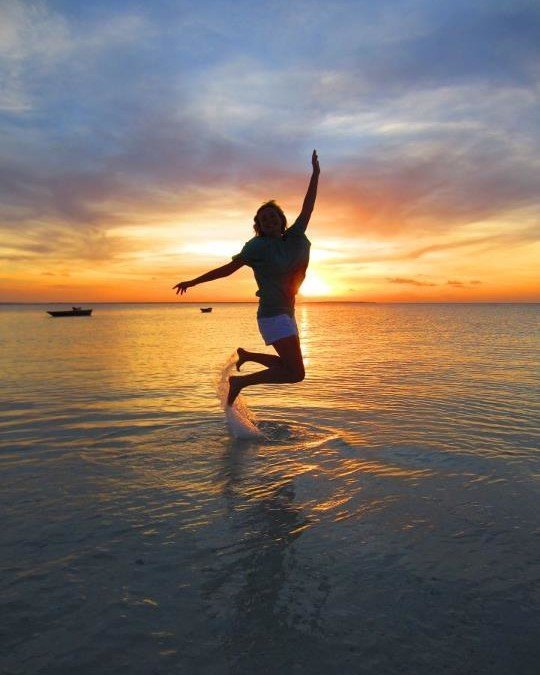
Jul 31, 2013 | Interior Crew Interviews
The Stewardess Bible Talks to 2nd Stewardess Katie Wilter
Journalist, graphic designer, half-marathon runner, and blogger behind Eyehearttravel — Katie Wilter brings a creative eye and a relentlessly positive outlook to life at sea. We caught up with her in Halifax, Nova Scotia, just before she headed back down the US east coast.
Where are you working at the moment? M/Y Solaia, currently in Halifax, Nova Scotia, Canada. We are heading back down the US east coast on Saturday.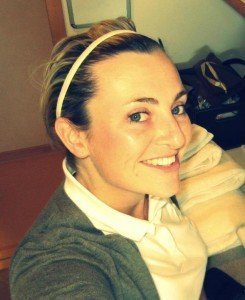
Star sign? Taurus.
Where are you from? Cape Town, South Africa.
How long have you worked on yachts? One year and three months — so still relatively green.
What did you like and dislike about your last job? I loved the crew and we had some great parties. What I disliked was the complete mismanagement and the genuinely poor treatment of the crew.
How did you get into the industry? A few friends had done it, and I needed a break from the nine-to-five office routine.
What are your biggest accomplishments? My degrees, certainly — a Bachelor of Journalism with Honours, and an MTN scholarship to complete a postgraduate Diploma in Media Management with Distinction, both at Rhodes University. Beyond that: completing five half marathons, exploring a good many countries with plenty still on the list, walking the Inca Trail, and still having the same best friends I had in high school. Love and miss you all.
Can you work under pressure? Of course. I am a stew and a graphic designer — both are entirely about meeting deadlines.
What is the most difficult situation you have faced? As a yachtie, being caught in horrible storms with extremely rough seas. In life more broadly, the loss of friends and family — and, like everyone, my own personal struggles along the way.
What are your pet hates? Constant sniffing — reach for a tissue! Narrow-minded perspectives, and cynical people.
 Tell me about the last time you felt anger at work. On my current yacht, honestly, I have not really felt angry at all. On my last yacht, though, I got genuinely angry about the mismanagement and ill-treatment of the crew — we were treated like the red-headed stepchild. Lack of sleep certainly did not help.
What do you do in your spare time? Blog, yoga, run, and explore wherever I happen to be — camera always in hand. Parties with friends, art galleries, wining and dining, reading magazines, books, and blogs, and generally trying to do something a little different.
Where do you see yourself in five years? I would love to have a successful travel blog or website running — something that gives me the flexibility for family life while continuing with freelance graphic design and writing. I would also love more time to paint and travel, and to keep being inspired by the everyday beauty I find in different places, people, and creations.
Favourite holiday destination, and why? Right now I am daydreaming about a yoga and surfing holiday in Costa Rica. Being outdoors in the sun and sea, meditating, doing yoga, relaxing, meeting new people, and experiencing a new culture — that would be a little slice of heaven.
Where do you like to shop? In Europe, H&M, Pimkie, and Zara. In the US, Gap, Victoria’s Secret, the Apple Store, Ross — and all the little boutiques I discover in tiny towns along my travels.
Can you recommend a product or service for fellow stewardesses? I am a big fan of Seventh Generation cleaning products — they are environmentally friendly, gentle on the skin, and scent-free. The washing liquid and dishwashing liquid are excellent. I also love wet Swiffer cloths for the crew mess floor; quick, easy, and they smell great. Domestic goddess, much?
Have you met any famous people, and what did you make of them? Nobody truly famous — just wealthy and well-known in their fields. I admire successful people and love chatting with them about how they got there. That said, I once served a famous model who was a complete airhead. You win some, you lose some!
What do you enjoy most about your job? The travel, and the salary — which is wonderfully easy to save.
Any advice for newcomers to the industry? Stay positive, stick it out — it takes a while to break in — and above all, follow your instincts.
Introducing: Eyehearttravel
Tell us about your blog — what inspires you, and how do you find the time to write? I write whenever I have something worth sharing — my favourite song of the week, recent photographs, or just my thoughts in words. I love all things travel, art, and beauty, so those are my main sources of inspiration. A phrase will pop into my head and I have to write it down immediately, then build it out from there. The content is quite varied — everything from wakeboarding to cooking lobsters.
The name Eyehearttravel simply popped into my head one day during my hour-long break on a charter. Despite being utterly zombie-tired with a growing pile of laundry still to iron, I snuck off with my mini laptop and created a WordPress blog. It is relatively new, but I am thoroughly enjoying my little project — even if the crew tease me about it and cannot quite see the point. (“Wait — you don’t get paid for this?”)
My yacht owner enjoys reading it, and it is a lovely way to share what I am up to with family and friends back home. It is frustrating not having the time to properly promote it on Twitter and the other platforms that demand constant attention, but I do what I can between charters. Blogging is all about the small wins — when I hit over 100 hits in a day, I do a little victory jiggle. It may be a tiny pip-squeak for now, but one day it might just blossom into something grand. Watch this space.
Thank you, Katie — here’s to Costa Rica, the small wins, and a blog that grows into everything you hope it will.
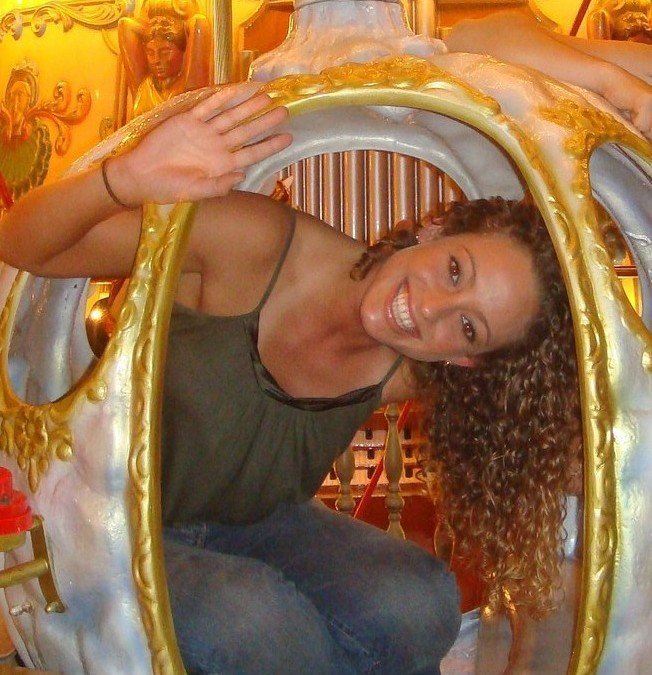
Jun 10, 2013 | Interior Crew Interviews
The Stewardess Bible Talks to Superyacht Stewardess Amy Dawes
Adventurous, well-travelled, and refreshingly candid — Amy Dawes has spent six years criss-crossing the Mediterranean, opened her own yoga studio, learned fluent Spanish, and very nearly come unstuck on the slopes of Snowdon. We sat down with her for one of our more entertaining crew interviews to date.
Where are you from? I am Australian, but I usually base myself in Argentina when I am not working on yachts.
What is your current position on board? I am 3rd Stewardess on my current vessel, though I have previously worked as 2nd.
How long have you worked on yachts? This will be my fourth Mediterranean season over the past six years.
What did you like and dislike about your last job? I loved that the owners were late risers and that the yacht was almost always in port — it meant I could get off board and go for a run every morning. What I disliked was how little we actually travelled; we spent weeks at a time in Cannes alone.
How did you get into the industry? In 2007, while travelling through South America for twelve months, I met a New Zealand girl in Peru who told me about working on yachts and the good salaries on offer. Towards the end of my travels I had a return flight booked to Europe, so — with no real idea what to expect — I jumped on a plane to Palma, landed in a crew house, and started learning what I needed to do. A couple of days later, CVs in hand, I went for a dock walk. A few minutes after that I had my first interview, and I was moving on board as a junior stew. It happened that fast.
Where do you see yourself in five years? I would like to move back to Australia at some point, and perhaps even start a family. That said, I love the hospitality and service industry, so I would like to combine that with my passion for yoga, alternative therapies, health, and nutrition — ideally working front of house at a health resort back home to gain some experience before exploring my own business opportunities.
What are your biggest personal accomplishments? Learning fluent Spanish, and opening my own yoga studio. Both took a great deal of work, and I am proud of both.
Can you work under pressure? Absolutely. Hospitality is fundamentally about working under pressure and managing your time well, and there are no exceptions to that during a stewardess’s busy season.
What is the most difficult situation you have faced? Losing the trail on a late summit attempt on Snowdon — I found myself climbing almost vertically up falling slate, with a rescue helicopter hovering over my shoulder watching our every move. I genuinely thought we might not make it. That, and my first season on board, living in such close quarters with so many people of different cultures, interests, and personalities. It is a bit like a Big Brother house — all the ups and downs included — and you learn an enormous amount about yourself, if you take the time to reflect on what is happening around you.
What bothers you? Negativity, more than anything. It is like a rotten apple in a barrel — it affects everyone in close proximity, and sometimes well beyond.
Tell me about the last time you felt real anger at work. I know there are moments in every season when everyone snaps, but a single specific instance of anger? I honestly cannot recall one — so it clearly cannot have been that important. Either that, or the eight months of travelling before this job did me a world of good!
What are your long-term career goals? As I mentioned, I would like to move into resort work in health and alternative therapy, and eventually open my own business. Time will tell. Honestly, I do not like to plan too far ahead. I would much rather enjoy the present, learn everything I can, and take advantage of the opportunities that present themselves along the way. Where that leads, nobody knows — and that is exactly what I love. The freedom to adapt.
When and why did you set these goals, and how are you preparing for them? Getting married earlier this year, to someone outside the industry, made me question the instability of yachting and reassess my future. I find organisation and business planning come naturally to me, so I am using my time to network, learn from people and experiences, pursue personal study — and, of course, put a few coins in the piggy bank along the way.
What do you do in your spare time? I love being in the sun, travelling, running, yoga, and eating. That last one is probably why I enjoy working on yachts so much.
What makes you laugh? Good company, every time.
What makes you cry? Sad films — and sympathy crying!
What is your favourite colour? It depends on the day. I love colour — anything bright. No blacks, greys, browns, or blues for me, thank you.
What do you think of the term “stupidess”? Used to describe a dim stewardess, I suppose? Like most terms of that kind, it depends entirely on context. I would be the first to laugh at myself for a daft mistake, and if someone said it in that spirit I would not think twice. But if it were said in a chauvinistic way about stewardesses in general, it could be quite offensive.
Have you heard the crew talk about the “stewie bum,” and how do you feel about it? Ha! Yes — I am growing one as we speak. You have got to love the incredible food we get on board during a season. I enjoy a bit of banter; nobody is perfect, so give it right back to them. They are not gods, after all.
Have you ever met anyone famous? I have never spent any real time with anyone famous, but working on yachts and in restaurants I have certainly served a few celebrities. The thing is, I do not watch much television or read gossip magazines, so I am usually entirely oblivious to who they actually are.
What is the most embarrassing thing you have ever done? Without going into detail… let us just say it involved a boyfriend, an intimate moment, and my father. I will leave it there.
The most embarrassing thing you have seen someone else do? I could not possibly say — in case they ever stumble across this on the internet!
How do you find working on a new build project? I really enjoy it. It is wonderfully busy, with interesting things happening every day. There is far more organisation and office work involved, which I love, and the best part is that you can set everything up exactly the way your department wants it. I have learned a great deal about brands and suppliers, and have taken on some of the chief stew’s responsibilities while her hands have been tied up with administrative work.
What is it like being based in Vlissingen? I have had some fun times in town these past few weeks. Vlissingen is close enough to Amsterdam and Belgium to make for interesting trips on days off. On a sunny day, the alfresco dining in town and along the coast is lovely — though in general it is a touch too cold and windy for my liking. I am desperate for some Mediterranean sun!
Favourite destination, and why? Oh, I could not possibly choose just one. I have spent the last ten years travelling to more than forty-five countries, and every single place holds its own magic and happy memories — sometimes for the location, sometimes for the people I was with or met along the way, sometimes for the culture and the food. In general, I am drawn to developing destinations for their simplicity and natural beauty, and because the locals are so often warm, happy, and generous with their time.
Thank you, Amy — here’s to Mediterranean sun, new business ventures, and never quite knowing where the road leads next.

Oct 20, 2012 | The Superyacht
What Is a Superyacht and Who Owns Them?
“I must go down to the seas again, to the lonely sea and the sky, and all I ask is a tall ship and a star to steer her by.” — John Masefield, Sea Fever
For many of us, superyachts represent the very pinnacle of luxury and exclusivity. These magnificent floating palaces are far more than boats. They are significant investments, symbols of status, and extraordinary feats of engineering that glide gracefully across the world’s oceans.
In this article, we will take you on a journey into the world of superyachts — exploring what defines them, who owns them, where they travel, and the dedicated crew who bring them to life.
What Is a Superyacht?
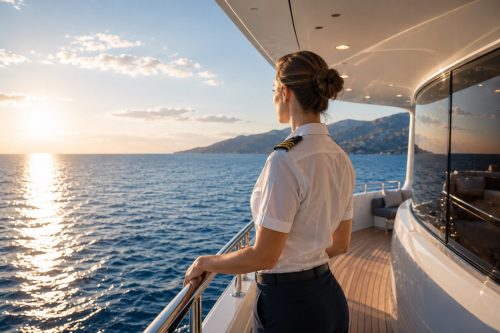
A superyacht — often used interchangeably with terms such as luxury yacht, megayacht, and large yacht — refers to a class of large, privately owned, professionally crewed vessel designed to deliver an unrivalled level of comfort and opulence.
Generally, a superyacht is defined as a vessel measuring 24 metres (around 79 feet) or more in length, with the largest examples now exceeding 130 metres (over 426 feet). Beyond 60 metres, you enter megayacht territory; beyond 90 metres, the term gigayacht has come into increasingly common use as the world’s wealthiest individuals compete to build ever larger and more spectacular vessels.
These are not boats in any ordinary sense. They are equipped with cutting-edge technology and often feature lavish amenities — helicopter pads, swimming pools, cinemas, beach clubs, wine cellars, submarines, and art collections of extraordinary value. The modern superyacht is, quite simply, the ultimate expression of private luxury.
Who Owns Superyachts?
The demographic of superyacht owners is every bit as exclusive as the vessels themselves — typically comprising billionaires, ultra-high-net-worth individuals, and the occasional well-known public figure.
Owning a superyacht is widely regarded as one of the ultimate symbols of wealth and success, owing to the substantial financial commitment involved. The cost extends well beyond the purchase price: crew salaries, fuel, dockage, insurance, refits, and ongoing maintenance routinely run into millions each year. A commonly cited rule of thumb is that the annual running cost of a superyacht is approximately ten percent of its purchase price.
Owners come from every corner of the globe and every industry imaginable — technology, energy, finance, real estate, and entertainment among them. Some are household names; the great majority actively prefer that they are not. For the crew who serve them, what matters is not who the owner is, but what they expect: discretion, impeccable service, and absolute professionalism.
Where Do Superyachts Travel?
Superyachts are built to roam the world, cruising some of the most beautiful and exclusive destinations on the planet. Two regions in particular dominate the yachting calendar.
The Mediterranean is the heart of the summer season, running roughly from April to October. During these months, yachts cruise the coastlines of France, Italy, Spain, Greece, and Croatia, calling at glamorous ports such as Monaco, Saint-Tropez, Portofino, and the Balearic Islands.
The Caribbean takes over in winter, from around November to April, when the fleet crosses the Atlantic to enjoy the warm waters and idyllic islands of the Bahamas, the British Virgin Islands, St Barts, Antigua, and beyond.
Many vessels also undertake extended world voyages between seasons, exploring more remote and adventurous destinations — the Pacific, South-East Asia, the Indian Ocean, and the polar regions among them.
Who Works on a Superyacht?
Running a superyacht is a complex operation that depends on a highly skilled, dedicated, and tightly coordinated crew. The exact number and roles vary according to the size of the vessel and the owner’s requirements, but a typical crew structure includes:
Captain — Responsible for the navigation, safety, and overall operation of the vessel, and the ultimate authority on board.
Chief Engineer — Oversees all mechanical, electrical, and technical systems, keeping the yacht running smoothly and safely.
Chef — Provides exceptional, restaurant-quality cuisine tailored precisely to the tastes and preferences of the owner and guests.
Chief Stewardess / Steward — Heads the interior department, maintaining the yacht’s interior to an immaculate standard and orchestrating flawless guest service and hospitality.
Deckhands — Handle exterior maintenance, watersports, tender operations, and the safety of the vessel above the waterline.
Life on board is both demanding and deeply rewarding. Crew members frequently work long hours to deliver the very highest standards of service and safety — but in return, they travel the world, build extraordinary careers, and form the kind of bonds that only come from living and working at sea.
For those drawn to this remarkable industry, The Stewardess Bible offers a trusted, experience-led guide to building a successful and rewarding career on board — from your very first day on the dock to leading an interior department.
Oct 5, 2012 | Superyacht Crew Training
Basic seamanship can feel a little daunting for any newcomer to the yachting industry — but it is absolutely essential knowledge for any seafaring professional. And yes, that includes the superyacht stewardess.
Let me paint you a picture.
You have just landed your first job on a superyacht. Your bags are on board, you are buzzing with excitement, and the yacht is leaving port in two hours. The mate, chief officer, or safety officer — depending on the size of the vessel — gives you your initial safety briefing and walk-around, then asks you to meet him on the main deck, port side, amidships.
What do you do?
Do you giggle, flick your hair, and ask what on earth that means? Do you stride off confidently, only to find yourself hopelessly lost and thoroughly embarrassed when a crew member is sent to retrieve you? Or do you head straight to the correct spot — the middle of the vessel, roughly halfway between the bow and the stern, on the left-hand side?
If you want to be the third stewardess, read on.
Far too many stewardesses underestimate how important basic seamanship truly is. Understanding sailing terminology matters enormously — especially when the vessel is both your home and your workplace, and when knowing your way around could one day save your life.
Why Seamanship Matters for Interior Crew
You do not need to be a qualified deckhand to work in the interior. But the moment you step on board, you become part of the crew — and that carries real responsibilities. You will participate in safety drills. You will need to understand emergency procedures and your muster responsibilities. You will need to move around the vessel quickly and confidently, often in the dark, often under pressure.
Learning the language of the sea is the first step. It will help you navigate the vessel with ease, understand instructions instantly, present yourself as a credible professional from day one — and, in a genuine emergency, it could be the difference that matters most.
Essential Nautical Terminology
Below is a glossary I have put together to help you get your head around the most important nautical terms.
A
- Aft: The back end of the yacht; also referred to as the stern.
- Anchor ball: A round black shape hoisted forward to indicate the yacht is at anchor.
B
- Bow / Forward: The front part of the yacht.
- Bowline (line): The mooring line running from the bow when docking.
- Bowline (knot): A knot that produces a strong, fixed loop. Well worth learning — it is invaluable for safely securing a tender.
- Bosun: The non-commissioned officer responsible for deck equipment and in charge of the deck crew.
- Beam: The width of the yacht at its widest point.
- Bilge: The lowest compartment of the hull, where any water collects; often used for storage.
- Bridge: The command centre from which the yacht is steered, navigated, and controlled — and a reliable place to find the captain.
C
- Cast off: To release the lines and depart.
- Capstan: A large vertical winch used to haul in anchors or tighten lines.
- Cleat: A fitting to which lines are secured (made fast).
- Cockpit: An opening in the deck from which a sailing yacht is handled.
D
- Deck fittings: The hardware used to work and secure lines, including cleats, pad eyes, and bitts.
- Dead ahead: Directly in front of the vessel.
E
- EPIRB (Emergency Position Indicating Radio Beacon): A distress beacon that transmits the vessel’s location in an emergency. Know exactly where this is fitted on every yacht you work aboard — it could save your life.
F
- Fairlead: A rounded opening used to guide a line and prevent chafing.
- Fire extinguishers: Covered in your STCW firefighting module — here are the essentials again:
- Foam (Class A & B): For solids and liquids; commonly found in the interior.
- Powder (Class A, B & C): Effective but rarely used on board due to the collateral mess and damage they cause.
- CO₂ (Class B): Found in the galley and near electrical equipment. Never use on a person — it causes frost burns.
- First mate (chief officer): Second in command.
- Fender: An air-filled bumper that protects the hull from docks and other vessels.
G
- Galley: The kitchen.
- Gear: A general term for deck equipment — ropes, blocks, tackle, and so on.
- Gangway: The point at which people board and disembark the vessel.
H
- Head: The toilet.
- Hull: The main body and structure of the vessel.
K
- Keel: The central structural backbone running along the bottom of the vessel.
- Knot: The unit of speed at sea. 1 knot = 1 nautical mile per hour ≈ 1.15 mph ≈ 1.85 km/h.
L
- List: A lean or tilt to one side. (A tilt along the vessel’s length is called pitch.)
- LOA (Length Overall): The total length of the yacht measured along its centreline.
- Lazarette: The aft storage area — effectively the “garage” — where watertoys and equipment are kept.
- Leeward: The side sheltered from the wind. The opposite of windward. (Pronounced “loo-erd.”)
M
- Master: The captain.
- Muster station: The designated assembly point for crew and guests in an emergency. Know yours from day one.
P
- Passerelle: The walkway connecting the stern of the yacht to the shore.
- Port side: The left side of the yacht when facing forward. Remember it with the old verse: “No port left in the bottle” — port side is left, and port the drink is red, just like the port navigation light.
S
- Starboard side: The right side of the yacht when facing forward; the opposite of port. Note: port and starboard are always determined when facing the bow.
- Screw: The propeller.
- Scuppers: The drainage openings in the deck.
- Spring line: A mooring line used in docking to prevent the vessel moving forward or astern.
- Squall: A sudden, violent burst of wind, almost always accompanied by heavy rain.
- Stern: The rear of the yacht.
T
- Transom: The flat panel across the back of the yacht.
W
- Windward: The direction from which the wind is blowing; the opposite of leeward.
- Winch: A mechanical device used to haul in the anchor and tighten lines.
Learn Them, Live Them
Take a little time to memorise these terms before your first day on board. It will help you move around the vessel with confidence, understand your muster responsibilities far more quickly, and present yourself as the capable professional you intend to be from the very first moment you step across the gangway.
And one day — you never know — this knowledge may be exactly what you need in an emergency.
With thanks to my husband for his guidance in putting this together.
As always, wishing you safe travels and calm seas.

The Stewardess Bible is on sale now!

Jun 3, 2012 | Housekeeping
How to Clean Leather Aboard a Superyacht
Leather is one of the most luxurious — and most common — materials you will encounter in a superyacht interior. Sofas, dining chairs, sun pad cushions, helm seats, cabin headboards: leather is everywhere on board, and keeping it in immaculate condition is very much part of a professional stewardess’s remit.
The good news is that leather care is not complicated. My philosophy has always been the same: less is more. Gentle, regular maintenance will keep leather looking beautiful for years. Neglect, harsh products, or well-intentioned over-cleaning will age it prematurely and cause damage that is expensive — sometimes impossible — to reverse.
Here is everything you need to know.
Before You Begin: Know Your Leather
Not all leather is the same, and treating the wrong type incorrectly can cause serious damage. Before you clean any leather surface on board, establish what type it is. Check the manufacturer’s tags on the furniture, any documentation held in the vessel’s inventory files, or ask the interior designer or management company if you are unsure.
The majority of leather found on modern superyachts will be top-coat protected leather — a durable, sealed finish that responds well to the cleaning method below. However, some specialist or vintage leathers cannot tolerate water at all and must be cleaned by a professional. When in doubt, do not proceed without confirmation.
What You Will Need
- Vacuum cleaner with a soft brush attachment
- Mild, pH-neutral liquid soap — a gentle facial or hand wash such as Dove or a dedicated leather cleaner works well
- Distilled water (tap water may contain minerals and chlorine that can mark or degrade the leather surface over time)
- At least four clean, soft white cloths
- A water-based leather conditioner or protector
General Cleaning: Step by Step
1. Vacuum first. Using the soft brush attachment, vacuum the entire surface thoroughly — seams, crevices, and all. Leather scratches easily, so ensure the attachment is genuinely soft and the suction is not excessively strong. On very delicate pieces, a hand-held vacuum on a low setting is preferable.
2. Mix your cleaning solution. Add a small amount of mild liquid soap to approximately one litre of distilled water and mix gently until light suds form. You need very little soap — this should be a barely-there solution, not a bubble bath.
3. Test first — always. Before cleaning any surface, test your solution on a small, inconspicuous area and allow it to dry completely. This is non-negotiable on a superyacht, where replacing a damaged leather sofa is a very expensive conversation to have with an owner.
4. Clean one section at a time. Dip a clean cloth into the soapy water and wring it out thoroughly — it should be barely damp, not wet. Wipe the leather surface using gentle, even strokes. Work methodically, section by section.
5. Remove all soap residue. Using a second cloth dipped in clean distilled water — again, wrung out thoroughly — wipe away all traces of soap. Soap residue left on leather will cause it to dry out and crack over time.
6. Dry immediately. Use a third clean, dry cloth to remove all remaining moisture. Do not allow leather to air-dry on its own — prolonged dampness can cause staining and deterioration.
7. Buff to restore lustre. Use the fourth clean cloth to buff the surface gently in circular motions. This restores the natural sheen and lifts the nap of the leather.
8. Condition. Apply a water-based leather conditioner following the product instructions. Conditioning replenishes the natural oils in the leather, keeping it supple and preventing cracking — particularly important on a vessel where salt air, sun, and air conditioning all work against it.
Stain Removal
Always test any stain removal method on a hidden area first. If there is any doubt at all about value or sensitivity of the piece, consult a professional before proceeding.
Ink stains Dip a cotton bud in isopropyl (rubbing) alcohol and dab — do not rub — directly onto the stain. Work carefully from the outer edge inward. Once the ink has lifted, dry the area immediately using a hairdryer on its lowest, coolest setting.
Food, blood, and dark stains Make a paste using equal parts cream of tartar and fresh lemon juice. Apply to the stain, leave for ten minutes, then remove with a damp cloth and a tiny amount of mild soap. Buff dry with a soft cloth once clean.
Grease stains Do not add water. Simply blot the grease immediately with a clean dry cloth to absorb as much as possible, then allow the remainder to dissipate naturally. Applying water to a grease stain will spread and set it further.
Newsprint Newspapers left on leather — particularly in direct sunlight — can transfer ink to the surface. Spray the stain lightly with an aerosol hairspray, allow a few seconds for it to work, then wipe clean with a soft cloth.
Products to Avoid — Without Exception
Leather on a superyacht is an investment, and the wrong product will damage it quickly and permanently. Never use the following on any leather surface:
- Oils of any kind, including mink oil — these will break down the leather’s finish and leave a sticky, attractant residue
- Furniture polish containing waxes or silicone, including products such as Pledge
- Saddle soap — too alkaline for modern furniture leather
- Ammonia-based cleaners, including glass cleaners such as Windex
- Bleach or any harsh abrasive cleaner
- Baby wipes — despite their gentle reputation, baby wipes are alkaline and will damage the leather finish over time
- Varnish or lacquer of any kind
Ongoing Care and Prevention
- Clean spills immediately. Leather is porous and will absorb liquid quickly. A spill dealt with in the first moments is a fraction of the work of one that has been left.
- Vacuum regularly to prevent dust and debris from settling into the grain and drying the leather out.
- Keep leather away from direct sunlight — UV exposure fades and dries leather rapidly. Use blinds or window coverings when the vessel is at rest in bright sun.
- Maintain distance from heat and air conditioning sources. Both will dry the leather and cause cracking. Keep leather furniture at least half a metre from any vent, radiator, or heat source.
- Condition two to four times per year, or more frequently if the leather is exposed to strong sun, salt air, or heavy use.
A useful conditioning remedy: Mix one part distilled white vinegar with two parts linseed oil in a clean bottle and shake well. Apply to the leather in broad, circular motions, leave for ten minutes, and buff thoroughly with a soft cloth. A second buffing is often needed. This is a gentle, effective way to replenish leather that is beginning to look dry or dull.
When to Call a Professional
If you are dealing with extensive staining, cracking, colour loss, or leather that has not been maintained properly over a prolonged period, professional leather restoration is the right course of action. There is no shame in it — a skilled restorer can return leather to a condition that no amount of DIY cleaning will achieve, and on a vessel where the interior represents a significant financial investment, professional care is simply good practice.
When in doubt, pick up the phone before you pick up the cloth.


