
Dec 29, 2014 | Cocktails
New Years Eve Party Ideas
I hope everyone had a wonderful and restful Christmas where ever you are in the world, warm or cold.
Now it’s time to turn our attention to that one event of the year where it is ok to let your hair down, contemplate the past year and make new and exciting plans for the year to come.
There are only 3 days left to prepare so below is a collection of beautiful and fun New Year Eve party ideas, that will stimulate, inspire and encourage you to put together the best New Year’s Eve party that your guests will be talking about for years to come.
Love Colour:
- I love the fact that this theme can look so glamorous just by using colour. The gold colours are guaranteed to shimmer and shine under any candlelight.
- Add a touch of gold crystal sugar to your champagne glasses and the theme is complete.
Black & White:
- What is there not to love about a Black & White themed party. It is so simple, elegant… And I know you will all have the means to be able to pull this theme off well!
- Use a crisp white table cloth, with white napkins. You can easily add a black accent to the cloth or add a little silver for added bling.
- The clocks are a fantastic idea and something that your chef will be able to do… Or for a simple solution buy some disposable clock paper plate of a quick and easy effect.
- Lastly, don’t forget the streamers and party horns… Again, I would keep to silver for a super clean look.
- If you loved this theme as much as I did, have a look at the full article on Pizzazzerie.
- People all over the globe celebrate NEW YEARS Eve in their own special way. However, as a superyacht stewardess, you are culturally aware and sensitive to different needs. With this in mind, you need to create something special for the New Years Eve party and what
French 75 – An Elegant Champagne Cocktail for New Years Eve
Serves: Serves 2
Ingredients
- 3 ounces gin
- 3 ounces fresh lemon juice
- 4 teaspoons superfine granulated sugar
- 1½ cups of ice cubes
- 1 cup chilled champagne
- Lemon twists for garnish
Instructions
- In a cocktail shaker, combine gin, lemon juice, sugar, and ice cubes and shake to chill.
- Strain cocktails into 2 champagne flutes and top off with champagne.
- Garnish glass with a lemon twist.

Nov 20, 2014 | Interior Crew Interviews, The Superyacht Stewardess
An Interview with Rookie Stewardess Annick Suplicy
Every great chief stewardess starts somewhere. In this series, The Stewardess Bible speaks to the crew who are living the early chapters — the ones still figuring it out, still finding their sea legs, and doing it beautifully anyway. Meet Annick Suplicy: junior housekeeper, Capricorn, and proof that the best careers are rarely the ones you planned.
Star sign? Capricorn.
Where are you from? Born in Spain, raised in Brazil.
Where do you call home these days? My family is in Brazil, but since January I have been living in Spain — so home is a little bit of both right now.
How long have you been working in the superyacht industry? Ten months.
What has been your biggest accomplishment so far? I am still junior, so nothing enormous yet — but being invited to temporarily join another boat belonging to my owner, working in the Seychelles, was a pretty special moment. I did not expect it, and it meant a great deal.
Can you work under pressure? I assume it is very hard. I still have to work on controlling my mood when things get intense — I am honest about that.
What is the most difficult situation you have faced? Dropping my Biological Sciences degree because I was deeply unhappy, without having any idea what to do next. At the time it felt like a failure. Looking back, it was one of the better decisions I ever made.
What are your pet hates? People being ironic or passive-aggressive with me. Chewing with an open mouth. Shouting. Slamming doors. None of these are negotiable for me.
Tell me about the last time you felt real anger at work. When a few crew members started complaining — purely for the sake of complaining — about some organisational improvements I had put in place. It was frustrating because the changes were genuinely for the better. I had to remind myself not to take it personally.
What do you do in your spare time? Honestly? I am in quite a low-energy season of my life right now, so I have been staying indoors more than I probably should. But when the energy is there, I love going out for a really good dinner. And whenever the opportunity presents itself — diving or snorkelling. Every time.
What makes you laugh? Good times with friends. And booze — with friends.
Where do you see yourself in five years? Chief stewardess or purser on a great vessel with a good rotation system. Something that lets me keep travelling properly, not just passing through ports.
Favourite holiday destination? I do not think a single favourite exists for me — I love too many places. But give me a good breeze, sunshine, excellent diving, and amazing food, and I am completely happy. The sea is always the answer.
Where do you like to shop? Small local shops. Things made nearby, by real people. I am not a mall person.
Can you recommend a product or service for fellow stewardesses? I am too new to be handing out advice just yet — ask me again in a few years.
What do you enjoy most about your job? The combination. A hospitality role that also moves you around the world, constantly introducing you to new places and people. It is genuinely unlike anything else.
What training did you need for this role? My position is junior housekeeper, so beyond the STCW and ENG1, nothing additional was formally required. That said, I chose to invest in a five-day interior course before I started — and I am glad I did.
Any vocabulary specific to your role that you would share with aspiring crew? Nothing is coming to mind right now — perhaps that is a sign I need to pay more attention!
What do you read daily? Health blogs, the news, and fiction e-books when I can. I always have something on the go.
If you could go back and change anything about your education or student years — would you? I honestly do not think I would. I dropped Biology in my second year, graduated in Product Design, and worked in that field for just over two years before ending up here. At the time it all felt rather chaotic. Now it makes perfect sense. Those experiences taught me who I am and led me exactly where I needed to be — and I am genuinely happy. You cannot argue with that.
What inspires you? Travelling, without question. And what I mean by that is everything travelling contains: the new cultures, the languages, the people, the exposure to ways of living that are completely different from your own. It is the best thing in the world. It is why I am here.
Thank you, Annick — here is to the Seychelles, the sea, and whatever extraordinary chapter comes next.

Oct 21, 2014 | Interior Crew Interviews, The Superyacht Stewardess
An Interview with Superyacht Nanny Arielle Maia
Not every member of a superyacht crew works in the interior or on deck. Some of the most fascinating roles on board are the ones guests never see. Arielle Maia is a superyacht nanny, three years into a career at sea, and the writer behind the blog Little Mermaid At Sea. We caught up with her to find out what life really looks like from her corner of the yacht.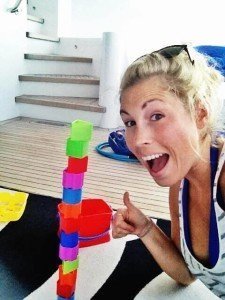
Where are you from? Annapolis, Maryland, USA.
What do you do in your spare time? I love anything that keeps me active. Lately I have got really into boxing — we have had a few months on land and I joined a recreational softball league too, which has been brilliant fun.
What makes you laugh? Everything, honestly. I can find something funny in almost any situation. But get me and my best friends together and we will turn absolutely anything into comedy.
Where do you see yourself in five years? Still in the travel and hospitality industry in some capacity. I have been giving some thought to hotel management lately, so something along those lines feels right.
Favourite holiday destination? That is a genuinely difficult question. I have always wanted to see the Greek islands and the pyramids in Egypt — but everywhere I have been in Europe makes my heart happy and I would go back in a heartbeat. You really cannot beat good bread and cheese with a view.
Where do you like to shop? Zara, Aritzia, and Madewell — but honestly, I probably spend most of my money in independent health food shops. I love trying new health foods and wellness trends.
What inspires you? Travelling, without question. Every time I arrive somewhere new I feel genuinely invigorated — there is a kind of high that comes from new sights and experiences that makes me see the world with fresh eyes every single time. I wish more people felt that way. I think it would do a great deal of good.
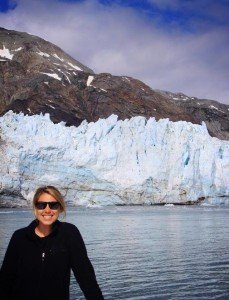 How long have you been in the superyacht industry? I completed my STCW in autumn 2010 but did not start working officially until a year later, so three years now.
What has been your biggest accomplishment? Finishing university and discovering my own independence. Both felt enormous at the time, and I am still proud of both.
Can you work under pressure? I think I actually work better under pressure. I love being busy, and I am generally good at compartmentalising and keeping a level head — which helps enormously in this industry.
What is the most difficult situation you have faced? Learning to accept my own flaws and limitations. We are all human — we have different strengths and weaknesses — and spending years berating yourself for the weaknesses rather than building on the strengths is exhausting and counterproductive. Learning to genuinely like who and what I am was a big challenge for a long time.
What are your pet hates? Passive aggression. I cannot stand it.
Tell me about the last time you felt real anger at work. I am not really someone who gets angry easily, but I think most crew will relate to what happens during a long shipyard period. Being stuck in one place for months — especially when the timeline keeps extending — can feel genuinely stifling. You have to actively work at keeping a good attitude so you do not become a miserable person to be around.
What do you enjoy most about your job? The sense of family we have on board. We are a small crew — just six of us, including the captain’s son — and we have all been together since the yacht launched. When you are so far from your actual family and friends, that closeness means everything. The travel is also, obviously, extraordinary.
Can you recommend a product or service for fellow stewardesses? We have been in the shipyard for months so my mind is not exactly sharp on this one — but oddly, all I keep thinking about is the tea tree oil cleaner our stewardess uses on the vents periodically. It is extremely pungent in person, but from a distance I have become strangely nostalgic for the smell of it. Make of that what you will.
One piece of advice for fellow crew and nannies? Take each day one at a time, but always be prepared. There is no point stressing about what is or is not coming. Give your best every single day, go to sleep knowing that you did, and let that be enough.
Introducing: Little Mermaid At Sea
Tell us about Little Mermaid At Sea. It was actually born over a farewell dinner with two of my closest friends. The original idea was simply a blog to keep family and friends at home updated on what I was getting up to on board and in my travels. It quickly grew into something much bigger after generating unexpected outside interest. Now I write about almost everything related to life on board, travel, and the specific experience of being a nanny aboard a private yacht.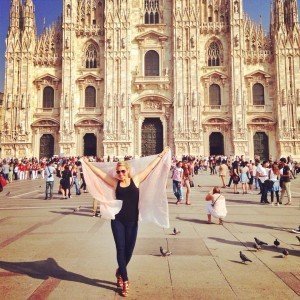
When did your love of travel begin? My father was in the US Navy and we were stationed in Naples, Italy during the first few years of my childhood. I have essentially been saving for the next trip ever since.
What do you read daily? A handful of travel blogs I follow regularly, plus news — it is easy to get absorbed in the yacht bubble and lose track of the world. Beyond that I have been working through biographies and autobiographies lately. I find people and their interpretations of their own lives endlessly fascinating.
If you could change one thing about your education, what would it be? I always planned to study abroad in France and it did not happen due to circumstances outside my control. I studied French all the way through university and I still intend to live in Paris at some point and study at La Sorbonne. It is not off the table — just delayed.
What is the strangest thing you have encountered in your travels? I write an occasional blog series called Fun Fashion Friday, covering unusual fashion trends from around the world. The instalment that got the most attention — and that I personally found the most surprising — was about the prevalence of couples wearing matching outfits across parts of Asia. I even spotted a couple in matching swimwear in Hawaii. I genuinely could not believe it was commercially available.
One travel tip? Do not over-plan. Some of my best memories have come from simply wandering — no itinerary, no guidebook, just seeing where the day takes me. You never know what you will find when you stop trying to find it.
Thank you, Arielle. Find her at Little Mermaid At Sea — travel, life on board, and the occasional matching swimsuit.

Sep 30, 2014 | Housekeeping
How to Launder Bodily Fluids Aboard a Superyacht
Let us be honest: nobody puts this chapter on their list of favourite reading. But if you work in the interior of a superyacht, handling bodily fluid stains quickly, correctly, and without fuss is simply part of the job — and doing it well is the mark of a true professional.
The good news is that most bodily fluid stains follow the same fundamental rules. Learn those rules, keep the right products on board, and nothing will catch you off guard.
The Golden Rule: Act Immediately
Before we go into specific stains, understand this one principle above all others: the faster you act, the easier the clean. A fresh stain dealt with in the first few minutes is a fraction of the work of a dried, set stain dealt with hours later.
On a superyacht, where linens, upholstery, and surfaces are often high-end and delicate, speed is your greatest cleaning tool. The moment a stain occurs — or is discovered — treat it.
How to Remove Vomit
Fresh stain: Remove any solid matter first using a clean cloth or paper towel, working from the outside of the stain inward to avoid spreading it. Blot — never rub — the remaining residue with cold water and a small amount of enzyme-based laundry detergent or an upholstery cleaner suitable for the surface. Rinse with cold water and allow to dry thoroughly.
Set or dried stain: Rehydrate the stain gently with cold water before treating. Apply an enzyme-based cleaner and allow it to sit for ten to fifteen minutes before blotting clean. For fabric and linen, a pre-soak in cold water with an enzyme detergent before laundering will lift most residue. Follow with a normal wash cycle at the temperature the fabric permits.
On hard surfaces: Wipe clean with a damp cloth and a surface-appropriate disinfectant. Ventilate the space well and use a neutralising spray — not a heavily perfumed air freshener, which will simply layer on top of the odour rather than eliminating it.
Important: Always use cold water on biological stains. Hot water sets protein-based stains permanently into fabric.
How to Remove Blood Stains
Blood is a protein-based stain, which means cold water is essential — hot water will bond the stain to the fibres and make it extremely difficult to remove.
Fresh stain on fabric or linen: Rinse immediately under cold running water to flush as much of the stain as possible. Apply a small amount of enzyme detergent, work it gently into the fibres, and rinse again. Repeat as needed before laundering normally.
Set or dried stain on fabric: Soak the item in cold water with an enzyme-based detergent for thirty minutes to an hour. For stubborn stains, a paste of biological washing powder and cold water applied directly to the stain and left to work before washing can be very effective. Do not place blood-stained items in a hot wash until the stain has been fully treated.
On hard surfaces: Wipe away with a cold damp cloth and a diluted disinfectant. For grout lines or textured surfaces, a soft brush will help lift residue.
How to Remove Urine Stains
Urine stains require two things: stain removal and odour neutralisation. Cleaning the visible mark without addressing the smell is only half the job done.
Fresh stain: Blot up as much moisture as possible immediately with a clean, dry cloth. Apply cold water and blot again. Then treat with an enzyme-based cleaner — these are specifically formulated to break down the uric acid crystals responsible for the persistent odour. Allow to sit for the time recommended on the product, then blot clean and allow to dry fully.
Set stain: The odour from a dried urine stain can be persistent and unpleasant, particularly on upholstery and mattress covers. Soak the area with an enzyme cleaner — do not be shy with the quantity, as it needs to penetrate as deeply as the original stain did — and allow it to work for a minimum of fifteen to twenty minutes before blotting away. Repeat if necessary.
On hard floors: Wipe clean with a diluted disinfectant and follow with a neutralising spray. Avoid ammonia-based cleaners, which actually intensify urine odour rather than eliminating it.
How to Remove Faecal Stains
On hard surfaces: Remove any solid matter first using disposable gloves and paper towels. Clean the area thoroughly with a disinfectant solution and a firm cloth or brush. Rinse and dry. Ventilate the space and use a neutralising spray.
On fabric or linen: Remove solid matter carefully before wetting the area. Rinse under cold running water, then pre-soak in cold water with an enzyme detergent for at least thirty minutes. Launder at the highest temperature the fabric safely permits. These items should always be washed separately from other laundry.
How to Remove Sweat Stains
Fresh perspiration stains are largely odour-based and respond well to normal laundering. It is the yellow, set sweat stains — most commonly seen on white shirt collars and underarms — that require a more targeted approach.
For yellowed sweat stains: Make a paste using bicarbonate of soda and white vinegar, or use an oxygen-based stain remover (such as OxiClean or a similar product). Apply directly to the stain, work it gently into the fabric, and leave it for thirty to sixty minutes before laundering. For particularly stubborn staining, a diluted solution of hydrogen peroxide (three percent) applied to the area and left for fifteen minutes before washing can be highly effective on white cotton.
Avoid using chlorine bleach on sweat stains — it can actually intensify the yellowing on protein-based stains rather than removing it.
How to Remove Breast Milk and Formula Stains
Both breast milk and formula are protein and fat-based stains and follow the same basic treatment as other biological stains.
Fresh stain: Rinse immediately with cold water and treat with an enzyme-based detergent before laundering normally.
Dried or set stain: Pre-soak in cold water with enzyme detergent for thirty minutes before washing. For yellow formula stains on fabric, an oxygen-based stain remover works well. Always check the care label before treating any luxury or delicate item — silk and fine linens will need a gentler approach.
Stain Treatment: Key Principles at a Glance
- Cold water only on all biological and protein-based stains — heat sets them permanently
- Act immediately — fresh stains are always easier to remove than set ones
- Enzyme-based cleaners are your most effective tool for biological stains
- Blot, never rub — rubbing spreads the stain and damages the fibres
- Neutralise odour as well as removing the visible mark — they are two separate steps
- Wear gloves when handling biological waste — always
- Separate contaminated laundry from all other items before washing
- Ventilate any treated space fully after cleaning
A Note on Luxury Fabrics
Superyacht linens are frequently high-end — Egyptian cotton, fine linen, silk, cashmere, and bespoke upholstery fabrics. Always check care labels before applying any treatment, and when in doubt, test any product on an inconspicuous area first. If a stain is on an expensive or irreplaceable item, consult a professional laundry service rather than risking further damage.
A well-stocked laundry kit on board should always include an enzyme-based pre-treatment spray, an oxygen-based stain remover, bicarbonate of soda, white vinegar, disposable gloves, and a selection of clean white cloths reserved for stain treatment.

Sep 24, 2014 | Interior Crew Interviews
An Interview with Superyacht Chief Stewardess Angela Orecchio
Four years into a career at sea, a blog that is going places, and a philosophy built on turning challenges into strength. Angela Orecchio is the kind of chief stewardess who leads by example — on the water and off it. We sat down with her to find out what makes her tick.
Where are you from? Just outside Seattle, Washington — a suburb called Bellevue. Not the hospital. Bellevue, the place where Bill Gates lives.
What do you do in your spare time? I write and develop my blog, ride my road bike, run, travel, hike, and explore. I love hoop dancing, and I get on a surfboard whenever the opportunity presents itself. Diving is something I want to do a lot more of.
What makes you laugh? Films from the early nineties — Planes, Trains & Automobiles, Wayne’s World, Big Business, Home Alone, Ace Ventura. And my boyfriend, who does a genuinely impressive impression of Jim Carrey.
Where do you see yourself in five years? Working full time on my travel, yachting, and health blog — The Yachtie Glow.
Favourite holiday destination? Hawaii and Costa Rica. I am happiest and most inspired somewhere tropical, where the water is warm, the waves are good, and the fruit is extraordinary. Thailand is coming up soon — I will report back on whether it makes the list.
Where do you like to shop? Lululemon, surf shops, Pottery Barn, and farmers’ markets.
What inspires you? Travelling. It pushes me beyond my immediate reality, makes me think beyond my own limitations, and reminds me to be grateful for everything I have. Being somewhere new also inspires me to write and create in ways that simply do not flow when I have been in one place for too long.
How long have you worked in the superyacht industry? Just over four years.
What has been your biggest accomplishment? Taking the most difficult things I have faced and turning them into my greatest source of strength. That is an ongoing process, but it is the one I am most proud of.
Can you work under pressure? I do not feel particularly healthy when I am stressed — but pressure sharpens my focus and I always get the job done.
What is the most difficult situation you have faced? A long period of anxiety and depression many years ago. Something I faced, worked through, and ultimately overcame through significant changes to my diet and lifestyle. I am open about it because I think it matters for people in this industry to know that these things can be addressed.
What are your pet hates? I know hate is a strong word — but: people who do not own up to their mistakes, people who hurt animals, and dirty bathrooms. None of these are acceptable.
Tell me about the last time you felt real anger at work. Dealing with a series of crew members who consistently disrespected the captain and took advantage of the owner at every opportunity. That kind of behaviour reflects on everyone on board, and it is not something I have any patience for.
What do you enjoy most about your job? Organising long-term projects, planning events for guests and crew, and those moments when everything comes together perfectly — a beautifully set table, a flawlessly made bed, a planned event that genuinely surprises and delights the guests. Seeing their faces in those moments never gets old.
Can you recommend a product or service for fellow stewardesses? Two things. The housekeeping module on The Stewardess Bible — there is a great deal of practical, useful content in there that I will be using to train my own crew. And my blog, The Yachtie Glow, where I focus on how to be both successful and genuinely healthy in this industry.
If you could give one piece of advice to fellow stewardesses, what would it be? Show your enthusiasm for this job — and for life — every single day.
Introducing: The Yachtie Glow
Tell us about The Yachtie Glow. It is a resource for new and existing yacht crew who want to succeed in the industry without burning out — covering professional advice, health, wellness, and travel. I have a new site being built now that will be far more user-friendly, with content that is better organised and easier to navigate. I am very excited about it.
When did your passion for health and wellness begin? In 2001, when I discovered I had a dairy intolerance. A friend took me to a food co-op and introduced me to dairy and meat alternatives, and to organic food. I went on to experiment with a number of different approaches before finding what truly worked for me — but that afternoon was the beginning of everything. I have never looked back.
What do you read daily? Travel blogs and health blogs. Always something from both.
If you could go back and change one thing about your education, what would it be? I would have studied theatre and dance rather than business. I have learned far more about the reality of business through my professional life than I ever did in a lecture theatre. The stage, though — that I genuinely wish I had pursued.
Thank you, Angela. Find her at The Yachtie Glow — a resource well worth bookmarking.

